
Signs of Life 1.0 Changes: Returning Player Guide
Every major Signs of Life 1.0 change: the ending, Xenoid cities, colony management, rebalanced gear, controls and co-op fixes.
1.0 adds an ending, expands Xenoid society, turns the post-game into a colony management layer, and fixes a pile of gear and co-op bugs. The core survival loop is unchanged.
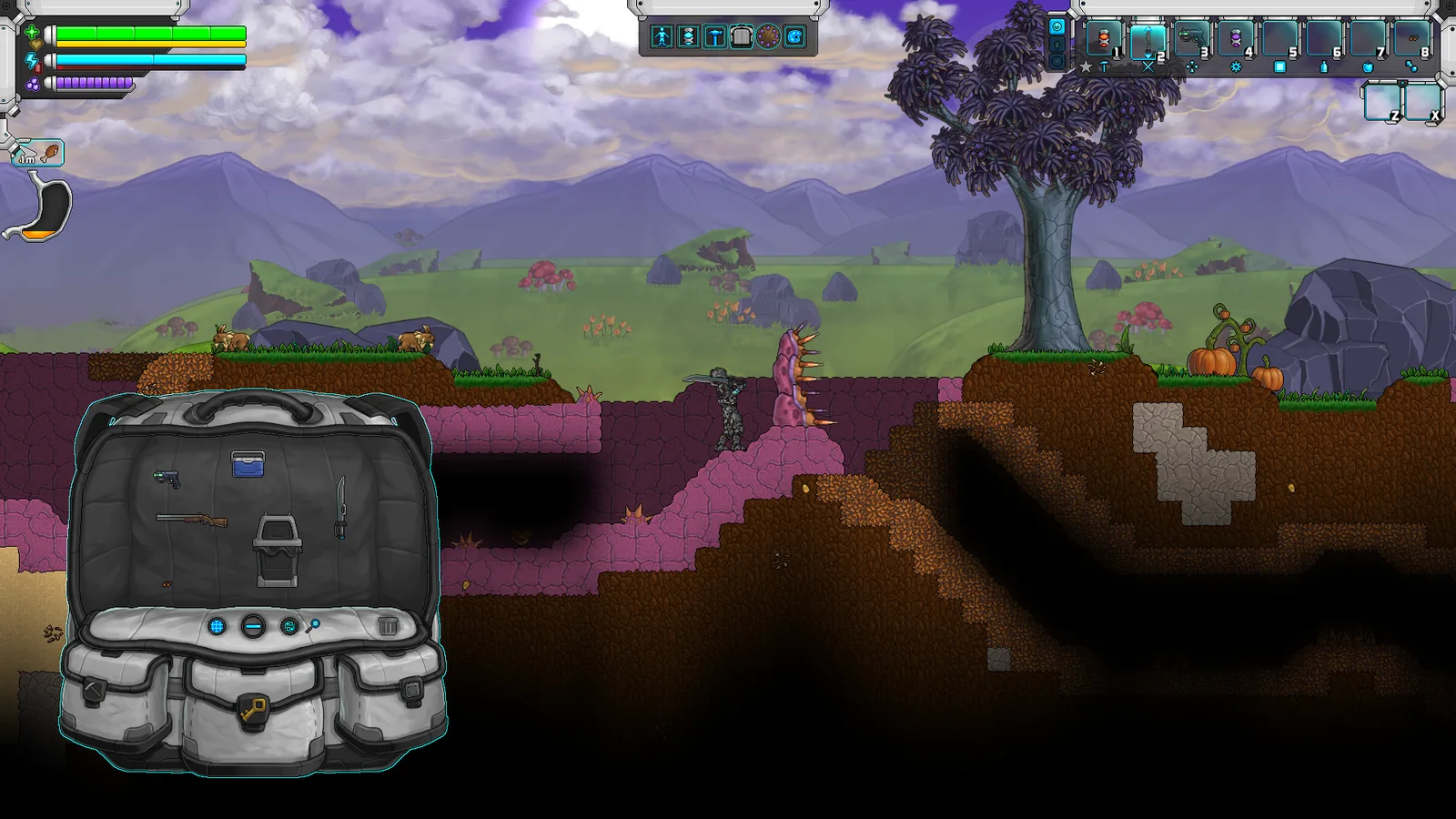
Signs of Life left Early Access on 9 November 2026. The announcement is careful to say that the game will keep receiving bug fixes and updates, so 1.0 is a line in the sand rather than an abandoned release. For anyone returning after a long break, the important question is not "what is new" but "what do I need to relearn".
This page answers that. It groups the changes by system and skips the patch notes that only affect a single item.
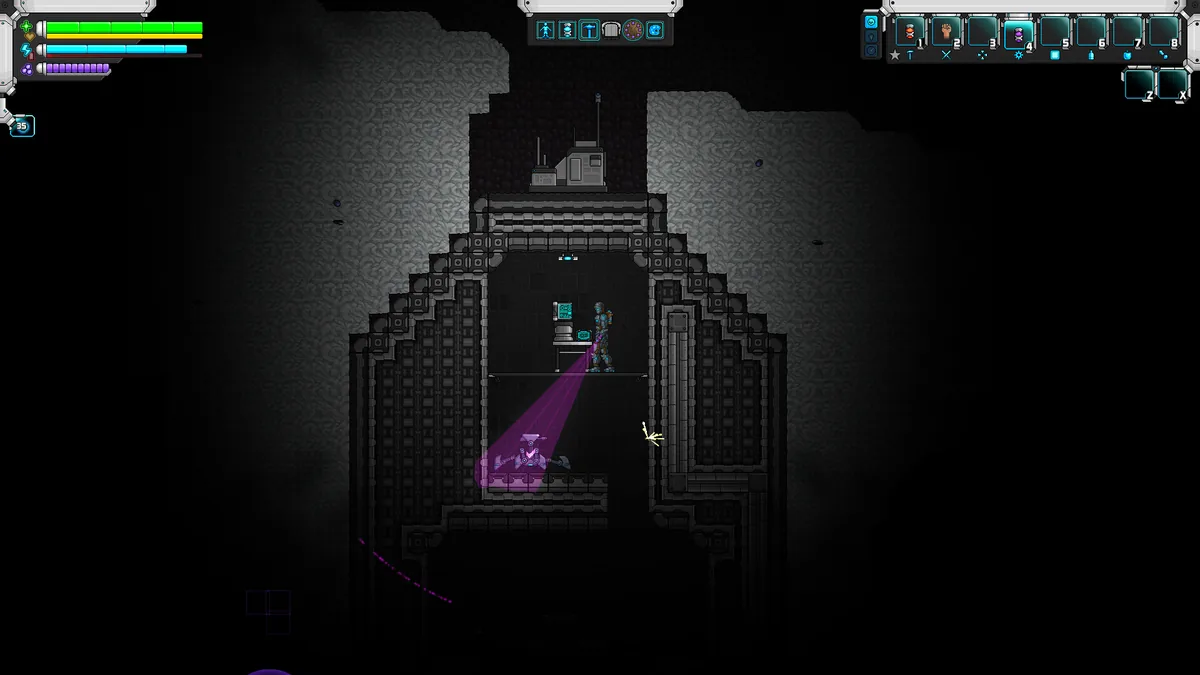
The 1.0 route pushes deeper into alien territory.
The ending is real
The biggest structural change is that the story now resolves. Update 25 introduced an ending and credits, and 1.0 ships with that ending as the intended conclusion rather than an optional extra. The route runs through the deep dungeon reached by the teleporter at the bottom of the world, into the territory of the native intelligent aliens, and through the language-learning chain.
If you stopped playing before Update 25, you have never seen the ending. Start a new world or load an old save and follow the MEG journal; the game records the steps you have already completed. The ending guide→ covers the route with spoiler warnings.
Xenoid society is bigger
Xenoid cities are no longer empty combat arenas. The 1.0 build expands their dialogue, adds families and children, and gives the houses more varied layouts, furniture, containers and loot. There are seven reusable Xenoid archive records; once you have learned enough of the language, AGIS can extract them into the MEG.
This matters mechanically because the Xenoid are the main source of Xenohide, Xenoid Alloy and several late-game crafting inputs. A city is now worth exploring room by room instead of clearing once and leaving.
The Xenoid guide→ covers their society, loot and the archive records. The alien language page→ explains how scanning inscriptions turns into comprehension.
Post-game colony management
Update 27 added a colony layer that only appears after the main story. A Pioneer Station contains a powered operations computer. Interacting with it lets you thaw colonists and assign them to jobs:
- Plant gathering, hunting and wood collection
- Fruit, fungi and nut foraging
- Mining and clay collection
- Medicine, cooking and salad preparation
- Pottery, workshop and smelting work
- Chemistry and ammunition production
Rooms must meet a strict rule: interior at least eight tiles wide and four tiles high, maximum 32 by 16 tiles, with background walls, a bed, a door or hatch, and a working light. Rooms on the Hephaestus do not count. Colonists produce goods into Pneumail shared storage.
The catch is that the station and console only generate on a newly created map. If your old save predates Update 27, you will not find the new colony console in it. The colonists guide→ covers room design, job assignment and storage.
Gear and combat fixes
Several long-standing annoyances were fixed for 1.0:
- Burst Rifle: the three-round burst now behaves correctly.
- Bionic Arm: the melee speed bonus works as intended.
- Energy Glove: the secondary attack is fixed.
- Explosive and Ant Goo arrows: both now apply their effects correctly.
- Optical Camouflage: works with cybernetic arms and legs.
- Pickaxe stamina: each swing costs five stamina.
- Blast Furnace: smelts twice as fast as a Draft Furnace and costs 12 iron ingots.
The practical effect is that several builds people avoided are now viable. A Bionic Arm melee run is no longer penalised by a broken speed bonus, and camouflage builds can use prosthetic limbs without losing the stealth effect.
New and revised equipment
Update 26 added cybernetic eyes with a laser and a cybernetic stomach that lets you regurgitate. Both use the Z and X overlay controls. Steel turrets now rotate a full 360 degrees and only target hostile creatures.
The Prototype Mining Suit is no longer placed in the open. Pieces are hidden behind furniture in newly generated worlds, and a datapad in Dr. Hahn's lab at the Pioneer Station points toward them. If you are hunting the suit on an old save, the old locations may not apply.
Update 25 also added six Ancient Alien Accessories, drone accessories that follow you and fire lasers, and a set of craftable instruments: Cymbals (two copper ingots), Drum (two hide, two boards, two plant fiber) and Tambourine (one additional copper ingot).
Quality-of-life changes
The 1.0 line includes changes that make the game less fiddly:
- Data pad handwritten notes persist and synchronise in co-op.
- Comm Beacons can be labelled and coloured.
- New characters can choose Small, Medium or Large worlds.
- The MEG has three tabs: Codex, Map and Upgrade.
- The journal records discoveries automatically.
- Food has its own HUD slot.
- Holding reload opens an ammunition radial menu.
- World Scale and UI Scale are separate settings.
- Interaction prompts are clearer.
- Controller support has a dedicated settings page.
These are not headline features, but they remove a lot of the friction that made the Early Access version feel older than it was.
Co-op fixes
Update 27 specifically addresses co-op: joining and reconnecting, shared containers, doors, elevators and the co-op ending. The underlying model is unchanged. One player hosts, friends join through Steam, and the host saves the world. There are no dedicated servers.
If you last played co-op before 1.0, update everyone to the same version before joining. A host running mods also requires every client to install the same mods. The multiplayer fixes guide→ covers the common errors.
What did not change
The core loop is the same. You still mine, craft, build, scan and fight on Osiris. The game still uses procedural terrain with hand-built locations. AGIS still comments on your progress. The Hephaestus still never reaches its destination.
That is worth saying because the 1.0 label can imply a redesign. It is not. If you disliked the moment-to-moment survival loop in Early Access, 1.0 will not convert you. If you liked it but ran out of goals, the ending and colony layer give you a reason to return.
Should you start a new world?
Start fresh if:
- Your old save predates Update 27 and you want the colony console.
- You have not played since before Update 25 and do not remember the story.
- You want the new Xenoid city layouts and the hidden Prototype Mining Suit.
Keep your old save if:
- You have a large base you do not want to rebuild.
- You only want to see the ending and do not care about post-game colonies.
- You are playing co-op with friends who are attached to the world.
The review→ covers whether 1.0 is worth buying for a new player, and the guide hub→ gives the first-hour route.
Official source: Sweet Dog Studios, Signs of Life 1.0 announcement and Updates 25-27 patch notes, checked 10 November 2026.
Sources and further reading
- 1.0 release announcement ↗ - leaving Early Access
- Update 27 patch notes ↗ - colony management and co-op fixes
- Update 26 patch notes ↗ - cybernetics, world sizes and mods
- Update 25 patch notes ↗ - ending, Xenoid, MEG and instruments
FAQ
Is Signs of Life 1.0 a sequel?
No. It is the full release of the same game, with an ending and additional systems. Saves from recent Early Access versions may still work, but new-world features such as the colony console require a fresh map.
Do I need a new world for the colony?
Yes. The Pioneer Station operations computer is generated on new maps. Old saves created before Update 27 do not gain it.
Did 1.0 change combat?
It fixed several gear behaviours rather than redesigning combat. Burst Rifle, Bionic Arm, Energy Glove, explosive arrows and optical camouflage all received corrections.
Is the Prototype Mining Suit still in the same place?
No. Update 26 hid the pieces behind furniture in new worlds and moved the hint to Dr. Hahn's lab. Old guides may point to outdated locations.
Related Signs of Life Guides
Our Signs of Life 1.0 review: a deep survival sandbox with a real ending, strong co-op and a steep learning curve, now at a lower price.
How the Signs of Life colony works: Pioneer Station computer, room requirements, colonist jobs, Pneumail storage and new-world requirements.
A complete Signs of Life guide for 1.0: first-hour route, base building, crafting, co-op, Xenoid story and the post-game colony.
The Signs of Life achievement list with global unlock rates, the gemologist chain, the joke achievements and a practical completion route.
How the Signs of Life alien language works: scan inscriptions, build understanding, unlock Xenoid dialogue and extract seven archive records with AGIS.
How armor works in Signs of Life, the best early and late sets, Ghost Hide and Energy Plate bonuses, mining suits and co-op gear priorities.
More Signs of Life Guides
Automate a Signs of Life base with turrets, Pneumail shared storage, drone accessories and post-game colonist jobs, without wasting power.
How base building works in Signs of Life: valid room sizes, walls, doors, lighting, station layout and the mistakes that waste materials.
Choosing a Signs of Life base location: ore access, flat ground, biome hazards, story travel and the best spots for a first or late-game base.
Practical Signs of Life tips for new players: scan everything, manage stamina, build one good room, and avoid the early base traps.
A tour of Signs of Life biomes: grasslands, purple alien terrain, caves, ruins, Xenoid cities and the late-game New Earth areas.
The major Signs of Life boss fights, the order to attempt them, gear checks and arena tips, plus a pointer to the Buff Mechington Mk2 strategy.
How to beat Buff Mechington Mk2 in Signs of Life: the glowing weak points, head-tail-chest order, the three-second chest window and co-op tactics.
How Signs of Life co-op works: Steam friend hosting, drop-in play, character transfer, shared storage, PvP settings and role splits for two players.