
Signs of Life Biomes: Osiris Surface, Caves and Alien Zones
A tour of Signs of Life biomes: grasslands, purple alien terrain, caves, ruins, Xenoid cities and the late-game New Earth areas.
Surface biomes give you a safe start. Caves give you ore. Alien zones give you the story and the best materials. You do not need to rush the last one.
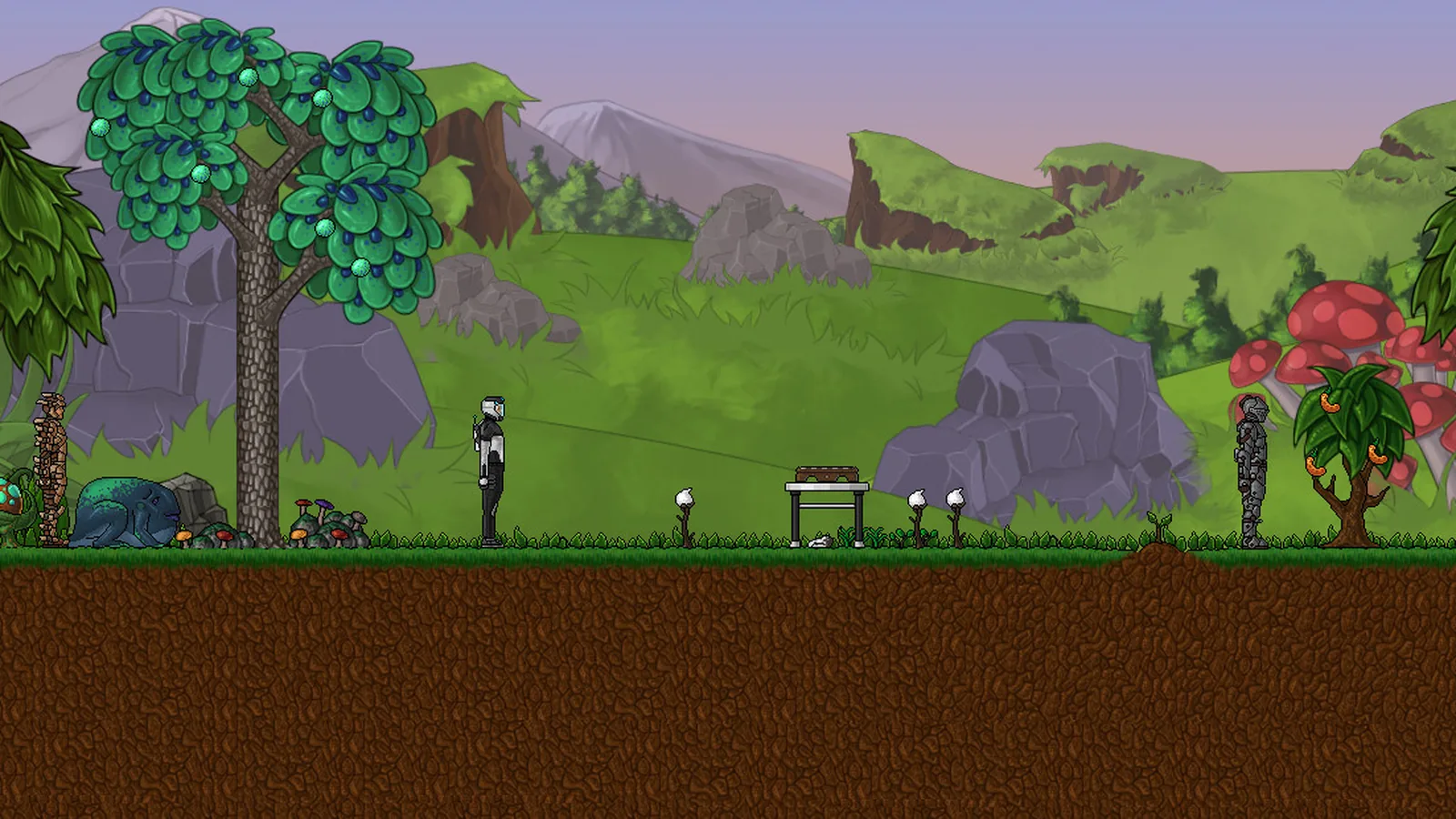
Osiris is generated from a mix of procedural terrain and hand-built locations. The result is not a clean set of themed zones with level ranges, but it does have distinct environments that change what you can gather and what can kill you.
This guide groups those environments by the stage of the game they support. Exact biome placement varies by world seed, so use this as a mental map rather than a coordinate list.
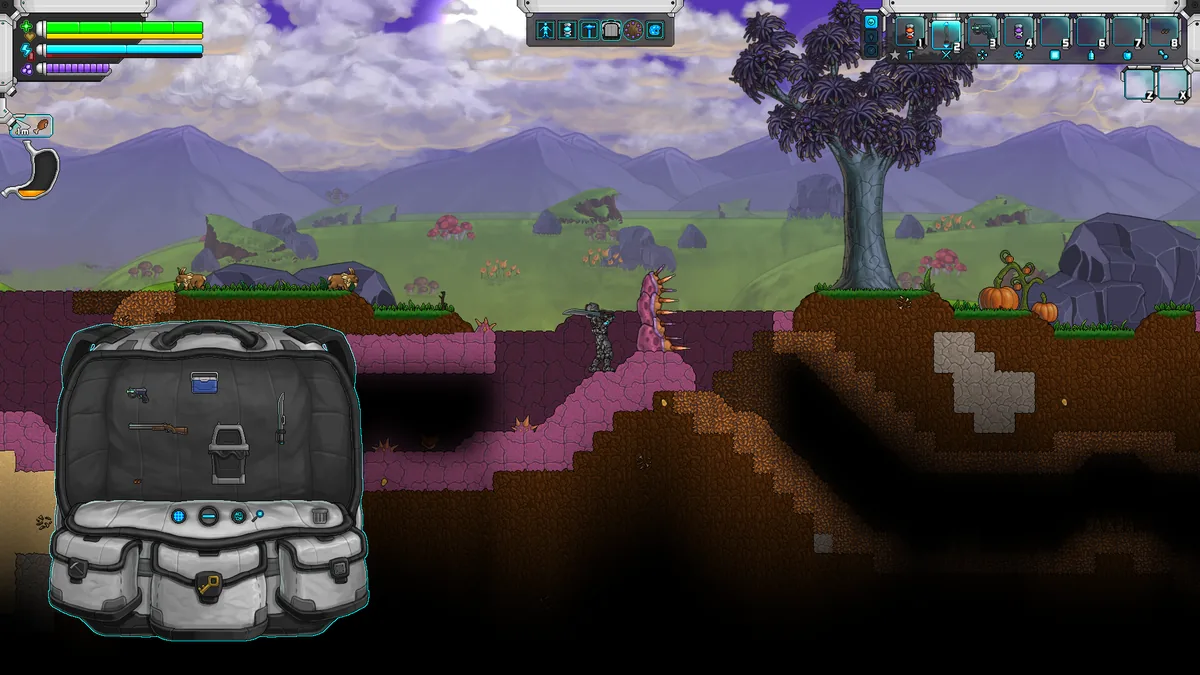
The surface is only the first layer of Osiris.
Grassland and forest surface
The starting surface is the most forgiving environment. It has open ground, trees, plant fiber, common animals and exposed copper and tin. The Mining Base sits in this band, and the first story locations are within walking distance.
What to expect:
- Wood and plant fiber for early crafting.
- Hide and bone from animals.
- Copper, tin and coal near the surface.
- Moderate enemies that teach combat timing.
- Weather and darkness at night.
This is where you build the first base. Do not rush to the alien zones before you have iron tools and a reliable food supply.
Dry and rocky terrain
As you move away from the starting grassland, the terrain opens into drier, rockier ground. Ore is more exposed, cover is scarcer, and enemies that rely on ambushes have fewer places to hide.
This band is good for:
- Stone and iron.
- Surface ore veins that are easy to spot.
- A forward base near a cave entrance.
It is worse for:
- Wood.
- Plant fiber.
- Safe retreats.
If you build here, bring wood from the grassland or trade for it in co-op.
Caves and the deep underground
Caves are the resource engine of Signs of Life. They hold iron, silver, gold, lead and the deeper exotic ores. They are also dark, cramped and full of enemies that punish careless movement.
Cave tiers, roughly:
- Upper caves: copper, tin, coal, common enemies. Safe with torches and a basic weapon.
- Mid caves: iron, silver, lead, tougher enemies. Bring food, a backup weapon and a route marker.
- Deep caves: gold, platinum, titanium, bornite, energite. Bring the best light and armour you have.
The game does not label these tiers. Depth and enemy type are your clues. If a cave starts producing enemies you cannot kill in a few hits, you are in the next band.
Lighting is the main logistics problem. Place torches as you descend and keep a spare stack. A dark retreat is how players lose their inventory.
Purple alien terrain
The purple strata and alien surfaces are the visual signature of Osiris. They are also where the game's story and late-game materials concentrate. Xenoid structures, ancient ruins and strange machines appear in these areas.
This is not a beginner zone. The enemies are tougher, the terrain is more vertical, and the resources require better tools. Treat it as a mid-to-late-game destination.
What you find there:
- Xenoid creatures and Xenohide.
- Xenoid Alloy and alien technology.
- Ruins with scannable inscriptions.
- Story locations and archive records.
Ruins and abandoned labs
Ruins are hand-built content, not procedural filler. They contain datapads, machines, loot and the history of the Hephaestus colony. The labs in particular hold electronics, experimental equipment and story clues.
Ruins are worth a full clear:
- Scan the walls and datapads before looting.
- Check behind furniture; Update 26 hid Prototype Mining Suit pieces this way.
- Look for hatches and valves that unlock recipes.
- Mark the location on the MEG map for a return trip.
Xenoid cities
Xenoid cities are the most complex alien locations. The 1.0 build adds families, children, more varied house layouts, furniture, containers and loot. Seven reusable archive records can be extracted into the MEG once you understand the language.
A city is not a simple dungeon. It is a settlement with rooms, NPCs and vertical spaces. Explore slowly, scan everything and avoid starting fights you cannot finish.
The Xenoid guide→ covers their society and loot.
The deep dungeon and the bottom of the world
A teleporter at the bottom of the world opens a new dungeon, and that dungeon connects to the territory of the native intelligent aliens. This is the main story's late-game route.
The dungeon is dark, vertical and full of enemies. Bring:
- Strong light.
- Food and healing.
- A reliable weapon.
- A free inventory for alien loot.
- A save backup before the final sequence.
New Earth
Update 26 mentions New Earth tunnels and Energy/Animate shrine layouts. New Earth is a late-game area rather than a starting biome. The shrines and longer tunnels are part of the post-Update 26 content, and the 1.0 build updates their layouts.
Treat New Earth as a destination for a geared player. Do not wander in with starter gear.
How biomes affect base choice
- Grassland: best first base. Wood, food, safe ground.
- Rocky terrain: good forward base near caves. Less wood.
- Caves: good mining outpost. Bad main base.
- Purple alien terrain: late-game outpost. High risk, high reward.
- Ruins: temporary shelter, not a permanent base.
The base locations guide→ turns this into a checklist.
Biome travel tips
- Carry a light source even in daylight; caves and ruins are dark.
- Mark your route with torches or Comm Beacons.
- Bring food in the dedicated HUD slot.
- Do not carry all your ore into a new biome.
- Scan first, fight second.
- Turn back when your inventory is half full, not when it is overflowing.
The map guide→ explains navigation, and the resources guide→ explains which materials belong to each band.
Official source: Steam store world description, Updates 25-27 patch notes and the official wiki biome and creature data, checked 10 November 2026.
Sources and further reading
- Steam store page ↗ - world and biome overview
- Update 26 patch notes ↗ - New Earth, caves and Xenoid drops
- Update 25 patch notes ↗ - deep dungeon and alien territory
- Official wiki ↗ - creature and structure reference
FAQ
What is the starting biome in Signs of Life?
The grassland and forest around the Mining Base. It has wood, plant fiber, common animals and surface copper and tin.
Where are the alien biomes?
The purple strata, ruins and Xenoid cities are mid-to-late-game areas. Follow the story and the MEG map rather than walking in from the start.
Are caves safe?
Upper caves are manageable with torches and a basic weapon. Deep caves require better gear and a planned route.
What is New Earth?
A late-game area mentioned in Update 26, with longer tunnels and Energy/Animate shrines. It is not a starting zone.
Related Signs of Life Guides
How to navigate Osiris in Signs of Life: MEG map, Comm Beacons, the Mining Base, caves, the bottom teleporter and the route to Xenoid territory.
Where to find every major Signs of Life resource: copper, iron, coal, titanium, Xenohide, plant fiber and the materials behind each crafting tier.
Who the Xenoid are in Signs of Life, what their cities contain, how to fight them, and where to find Xenohide, Xenoid Alloy and archive records.
Every major Signs of Life 1.0 change: the ending, Xenoid cities, colony management, rebalanced gear, controls and co-op fixes.
The Signs of Life achievement list with global unlock rates, the gemologist chain, the joke achievements and a practical completion route.
How the Signs of Life alien language works: scan inscriptions, build understanding, unlock Xenoid dialogue and extract seven archive records with AGIS.
More Signs of Life Guides
How armor works in Signs of Life, the best early and late sets, Ghost Hide and Energy Plate bonuses, mining suits and co-op gear priorities.
Automate a Signs of Life base with turrets, Pneumail shared storage, drone accessories and post-game colonist jobs, without wasting power.
How base building works in Signs of Life: valid room sizes, walls, doors, lighting, station layout and the mistakes that waste materials.
Choosing a Signs of Life base location: ore access, flat ground, biome hazards, story travel and the best spots for a first or late-game base.
Practical Signs of Life tips for new players: scan everything, manage stamina, build one good room, and avoid the early base traps.
The major Signs of Life boss fights, the order to attempt them, gear checks and arena tips, plus a pointer to the Buff Mechington Mk2 strategy.
How to beat Buff Mechington Mk2 in Signs of Life: the glowing weak points, head-tail-chest order, the three-second chest window and co-op tactics.
How Signs of Life co-op works: Steam friend hosting, drop-in play, character transfer, shared storage, PvP settings and role splits for two players.